Ask any construction director what keeps them up at night, and you will rarely hear them complain about pouring concrete or erecting steel. It is the pre-construction bottlenecks, shrinking margins, and unpredictable staffing costs that eat a business alive.
Building Information Modeling has become mandatory on almost every commercial and institutional tender today. Yet building a full-time digital department from scratch is a massive financial gamble. That is why a growing number of contractors and design studios are leaning on external partners like Silicon Engineering Consultants to deliver reliable bim services without bloating their permanent payroll. Still, handing your project files to an outside team feels risky when deadlines are tight. Let’s look honestly at the numbers, the workflow realities, and where outsourcing actually pays off.
What an In-House BIM Seat Really Costs You
When you budget for a new BIM coordinator, the base salary is only about sixty percent of what you will actually spend.
Once you factor in payroll taxes, health insurance, recruitment agency fees, and paid leave, that single hire gets expensive fast. Then come the technical bills: annual Autodesk Revit and Navisworks subscriptions, high-end GPUs, server storage, and ongoing training every time software updates roll out.
The real killer, though, is uneven workload. Construction runs in waves. You might have three massive bids land in April and nothing new break ground until August. With an internal team, you are paying full-time wages while people sit waiting for markups in summer—and watching them burn out on overtime come autumn.

Turning Fixed Overhead into Project-Based Spend
Bringing in bim outsourcing services flips your financial risk upside down. Instead of carrying heavy fixed overhead twelve months a year, you tie your drafting and modeling costs directly to active revenue.
Partnering with an established bim service provider usually trims production costs by a third or more compared to keeping everything under your own roof. You skip the upfront software licensing and hardware upgrades entirely because your external team already has those tools running at full capacity.
Just as importantly, it sharpens your bidding accuracy. Before you even submit a tender, you can get a fixed-price quote for the modeling scope, lock that number into your estimate, and protect your profit margin from surprise drafting hours later on.
Which Tasks Make Sense to Hand Off?
Outsourcing works best when you keep design leadership in-house and send repetitive, heavy-production work outside. Your senior architects and project engineers still control every design decision; they just stop spending forty hours a week doing manual modeling.
Core Model Creation: Routine architectural bim services and structural bim services—like turning 2D markups into clean LOD 300 models—are ideal candidates for external teams, freeing your local staff to focus on client meetings and site coordination.
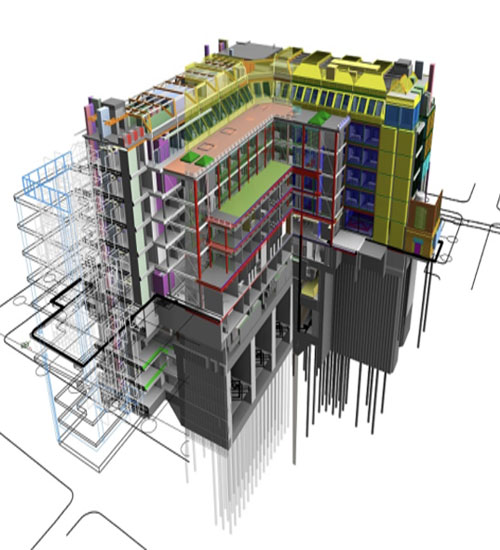
Clash Detection Before Groundbreak: A capable bim consulting company can merge architectural, structural, and MEP files early, flagging every pipe hitting a steel beam on screen before a single trade steps onto the job site. Resolving clashes digitally before mobilization prevents costly field rework and keeps trades moving smoothly.
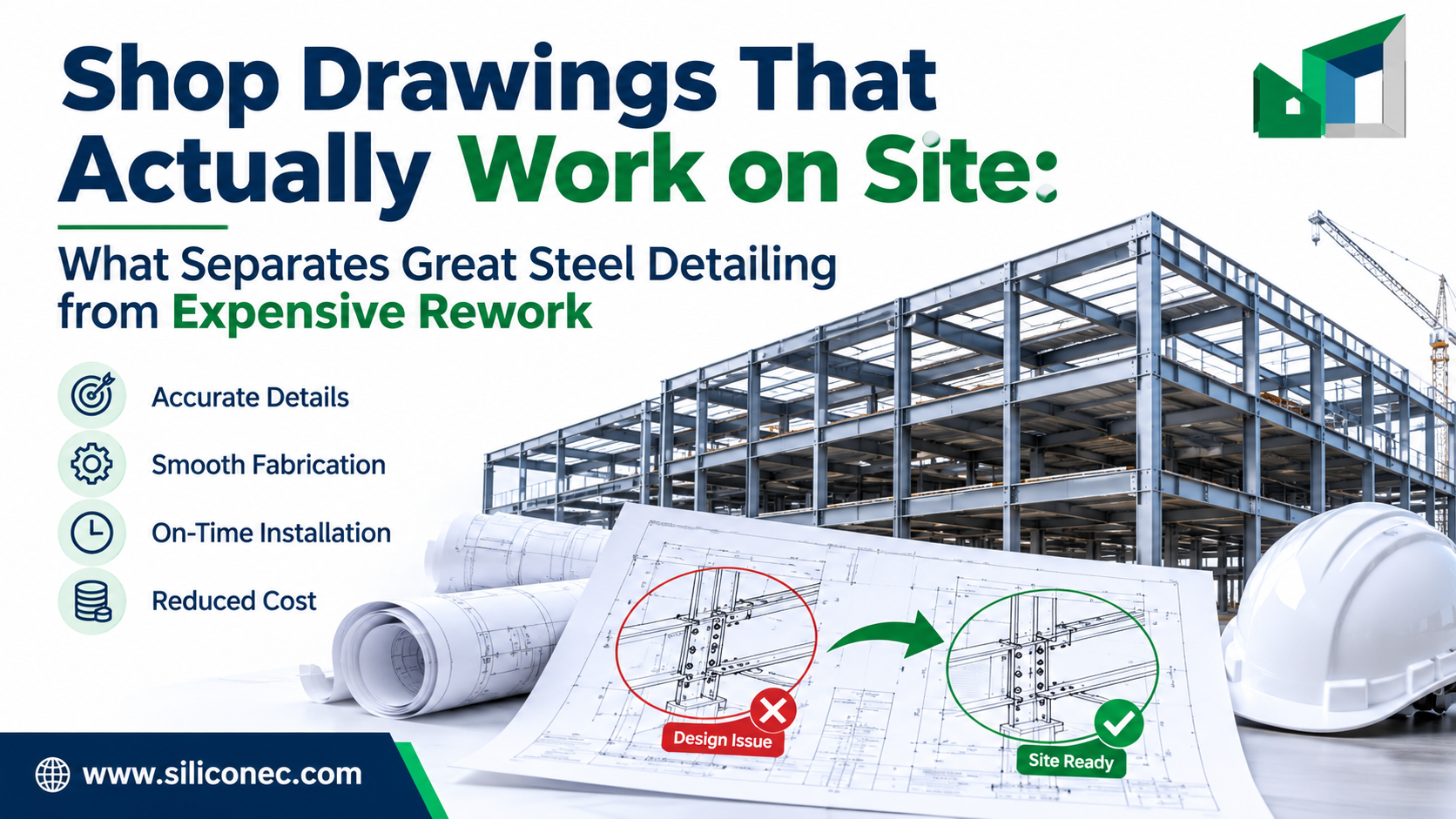
Shop Drawings and Documentation: Generating bim documentation services and BIM Shop Drawing services takes meticulous, time-consuming drafting. Experienced bim engineering services can churn out fabrication sheets, rebar schedules, and spool drawings quickly so field crews never sit idle waiting for paperwork.
Speed, Overnight Turnarounds, and Niche Skills
Cost savings might start the conversation, but speed is usually what keeps firms outsourcing long term. If you win two complex hospital or industrial projects back-to-back, hiring and training local Revit specialists could take four months—long after your first submittal deadline has passed.
Good bim outsourcing companies let you scale from two modelers to twelve in a week. Better yet, working across time zones creates an overnight production loop. Your project manager sends redlines at 5:00 PM, and an offshore bim modeling services crew updates the model while your office sleeps, leaving fresh sheets in your inbox by morning coffee.
You also gain instant access to specialists you could never justify hiring full-time. Need a bim consultant for a one-off Scan-to-BIM point cloud conversion or a 4D construction phasing animation? You rent that exact expertise for three weeks and walk away without adding permanent headcount.
A Quick Cost-Benefit Snapshot
Comparing both models side-by-side makes the operational trade-offs much clearer for finance and project directors:
How to Vet a Partner Without Getting Burned
Let’s be blunt: cheap outsourcing can become a nightmare if you treat it like a vending machine. If you hire the lowest bidder without checking their portfolio, you will spend more hours fixing messy families and broken views than you would have spent modeling from scratch.
Most failures come down to two things: vague expectations and slow feedback. If you do not define your Level of Development (LOD) requirements, file-naming rules, and local code standards on day one, you will get models back that do not match your office standards. And if your team takes five days to answer a simple RFI, your external modelers will stall.
When comparing bim companies, look past the hourly rate and ask three practical questions:
Can they show sample models at your required LOD? Ask to inspect an actual Revit file—not just polished marketing renders—to check how cleanly they organize parameters, worksets, and clash matrices.
Do they assign a dedicated project coordinator? Having one technical lead who understands your local building codes prevents details from getting lost in translation.
How do they protect your intellectual property? Reputable top bim companies sign strict non-disclosure agreements (NDAs), use encrypted cloud environments like Autodesk Construction Cloud, and never reuse client families across projects.
The safest move is always starting with a small paid pilot—say, one floor plate or a single structural zone—before committing an entire building.
Making the Call for Your Business
You do not have to choose between all-in-house and all-outsourced. In fact, the most profitable contractors run a hybrid setup.
Keep a tight, skilled internal lead to own client relationships, BIM execution plans, and final quality checks. Then lean on a dependable bim consultant company to absorb the heavy modeling, clash audits, and deadline crunches. Whether you need a specialized bim company for a single fast-track bid or an ongoing partner like Silicon Engineering Consultants to handle Structural BIM Services and drafting overflow, smart outsourcing keeps your overhead lean and your projects moving on schedule.