If you have ever spent time around a steel fabrication shop or an active job site, you know the exact moment a project starts going sideways. It rarely begins with some huge structural failure. Usually, it starts with a foreman staring at a drawing, looking up at a beam hanging from a crane, and realizing two bolt holes are off by half an inch.
At that point, the clock starts ticking loudly. Crane time burns money by the minute, ironworkers stand around waiting for answers, and a job that looked profitable on paper turns into a scramble of torch cutting and field welding.
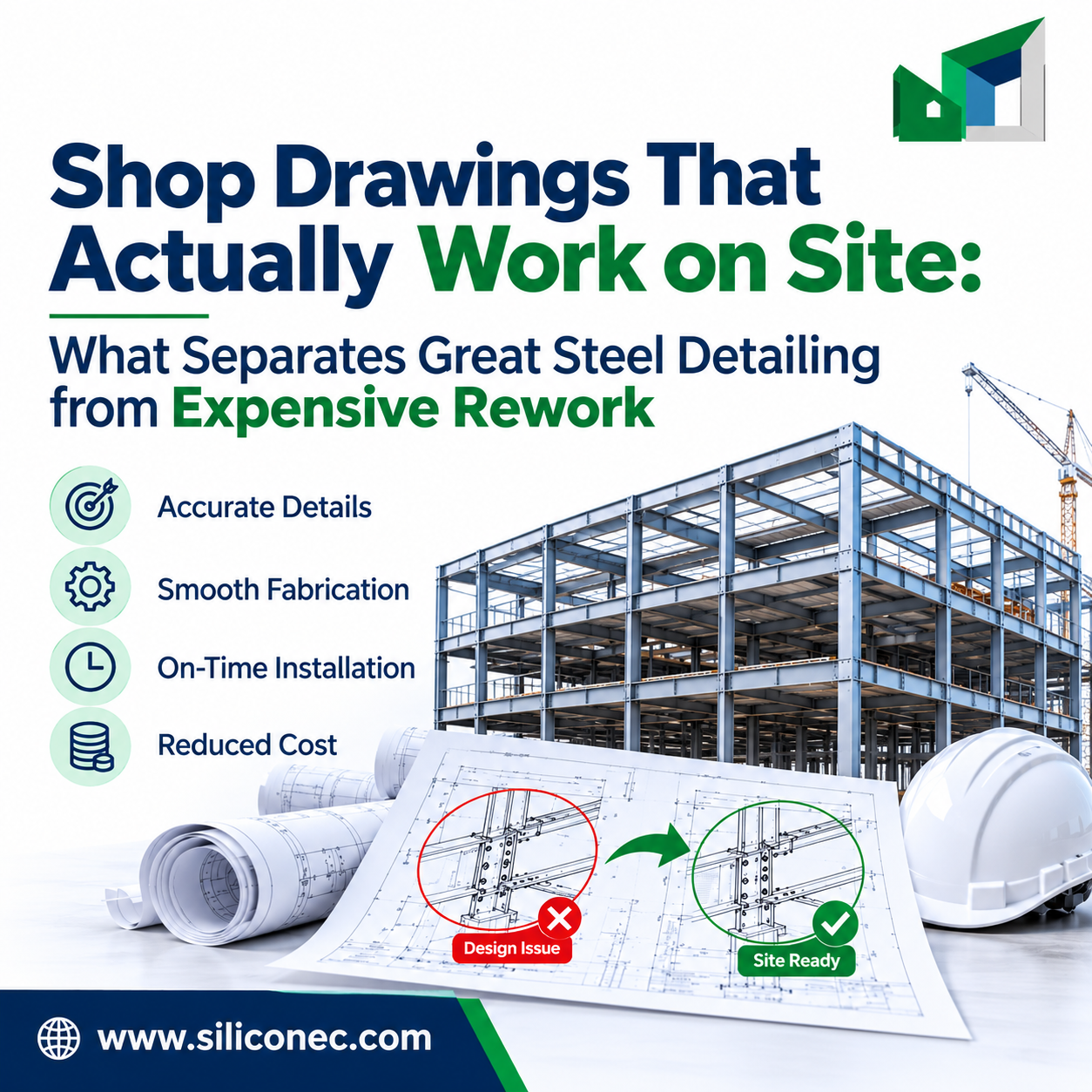
We talk a lot about getting steel out of the shop and bolted up without drama, and that conversation always comes back to shop drawings. Structural engineers give you the big picture—member sizes, loads, and overall geometry—but they don't tell the shop where every cope, weld, and bolt hole goes.
Filling that gap is the real job of steel detailing services. At Silicon Engineering Consultants, our teams work right alongside fabricators and contractors to turn engineering plans into clear, practical instructions that shop hands and field crews can build from without guessing.
A Pretty 3D Model Doesn't Guarantee a Smooth Build
Let’s be honest: software like Tekla and SDS/2 makes it pretty easy to build great-looking 3D models these days. You can spin a whole frame around on screen, zoom into every washer, and run automated clash checks in seconds.
Yet plenty of jobs with slick models still run into ugly surprises on site. Why? Because software only checks what you tell it to check. A computer doesn't know if an ironworker can actually swing a spud wrench inside a tight corner, or if bolting up one beam physically blocks the next guy from installing a shear tab.
Good detailing comes down to thinking three steps ahead of the person holding the wrench. A seasoned detailer looks at a connection and asks simple, real-world questions:
- Can the welder actually reach the back of that plate?
- Is there enough room to tilt this beam into place without hitting a wall?
- Are the piece marks laid out so the crew isn't flipping through forty sheets just to see which way a column faces?
When you sort those things out on paper, erection moves fast. When you don't, your job site turns into an expensive fabrication shop.
Where Steel Jobs Usually Hit a Wall
If you look back at change orders and back-charges on rough steel projects, the same handful of issues keep popping up:
- Vague Connection Details: Leaving connection assumptions up in the air between the engineer and the shop slows down approvals. Every bolt grade, weld size, and plate thickness needs to be locked in before steel hits the saw.
- Forgetting Real-World Tolerances: Structural steel isn't precision-machined aerospace metal. Beams have camber and mill tolerances, and drawings that assume zero-tolerance perfection leave crews fighting steel with drift pins and come-alongs.
- Missing Other Trades: Steel doesn't go up in an empty box. When anchor bolts, embed plates, and mechanical openings aren't coordinated early, field crews end up core-drilling fresh concrete or burning holes in brand-new beams.
What Good Detailing Actually Does for Your Project
Bringing in reliable structural steel detailing services isn't just about having someone draw lines in CAD. Think of it as an insurance policy before raw steel gets cut and drilled.
- Catches Design Gaps Early: A sharp detailer spots missing elevations or conflicting dimensions before fabrication begins, resolving them with clear RFIs rather than emergency calls when the flatbed pulls onto the site.
- Protects Concrete Schedules: Solid anchor bolt and embed plans mean the concrete crew sets everything right the first time—saving everyone from epoxying new anchors into cured foundations.
- Keeps the Shop Floor Moving: Clean assembly sheets keep shop fitters welding and drilling instead of calling the office every twenty minutes to ask what a symbol means.
Finding the Right Detailing Partner
With schedules getting tighter and experienced local detailers harder to hire, a lot of fabricators rely on steel detailing outsourcing to handle heavy workloads or tricky structures. That setup works great—as long as you treat your detailing team like part of your own shop, not just another vendor.
When you are vetting a steel structure detailing company, look past the software licenses and ask how they check their work:
- Who reviews the sheets before submittals go out?
- Do they know AISC standards and local shop preferences?
- Do they understand how crews actually sequence lifts in the field?
A good partner learns how your shop likes its drawings formatted, what bolts you keep in stock, and how your field team likes to work.
Don't Overlook the Secondary Steel
Main columns and roof trusses get most of the attention early on, yet secondary items are often what stall a project right before handover. Stairs, handrails, ladders, platforms, and lintels have to fit around finished walls and tight architectural clearances—meaning miscellaneous steel detailing requires just as much care as the primary frame. When those smaller pieces are modeled alongside the main structure, your crew isn't stuck field-cutting stringers or grinding down railings just to pass final inspection.
At the same time, pulling everything together depends on consistent documentation across both heavy structural members and architectural metals. Dependable steel fabrication shop drawing services give your fitters, welders, and erectors one unified set of sheets where every piece mark, weld symbol, and field bolt lines up cleanly from the first column lift to the final handrail bolt-up.
Getting It Right Before the First Cut
Steel detailing is a small slice of the overall construction budget, yet it controls whether a job finishes on time or bleeds cash in the field. One missed clash or wrong piece mark can wreck weeks of scheduling. Taking the time to get clean, buildable shop drawings pays for itself the second steel starts going up without a hitch.
If you have a commercial, industrial, or infrastructure build coming up, working with the right team changes everything. With over two decades of hands-on experience, Silicon Engineering Consultants provides clear, build-ready steel detailing built around the real demands of fabricators and contractors—helping your projects go from raw steel to final bolt-up cleanly and right on schedule.